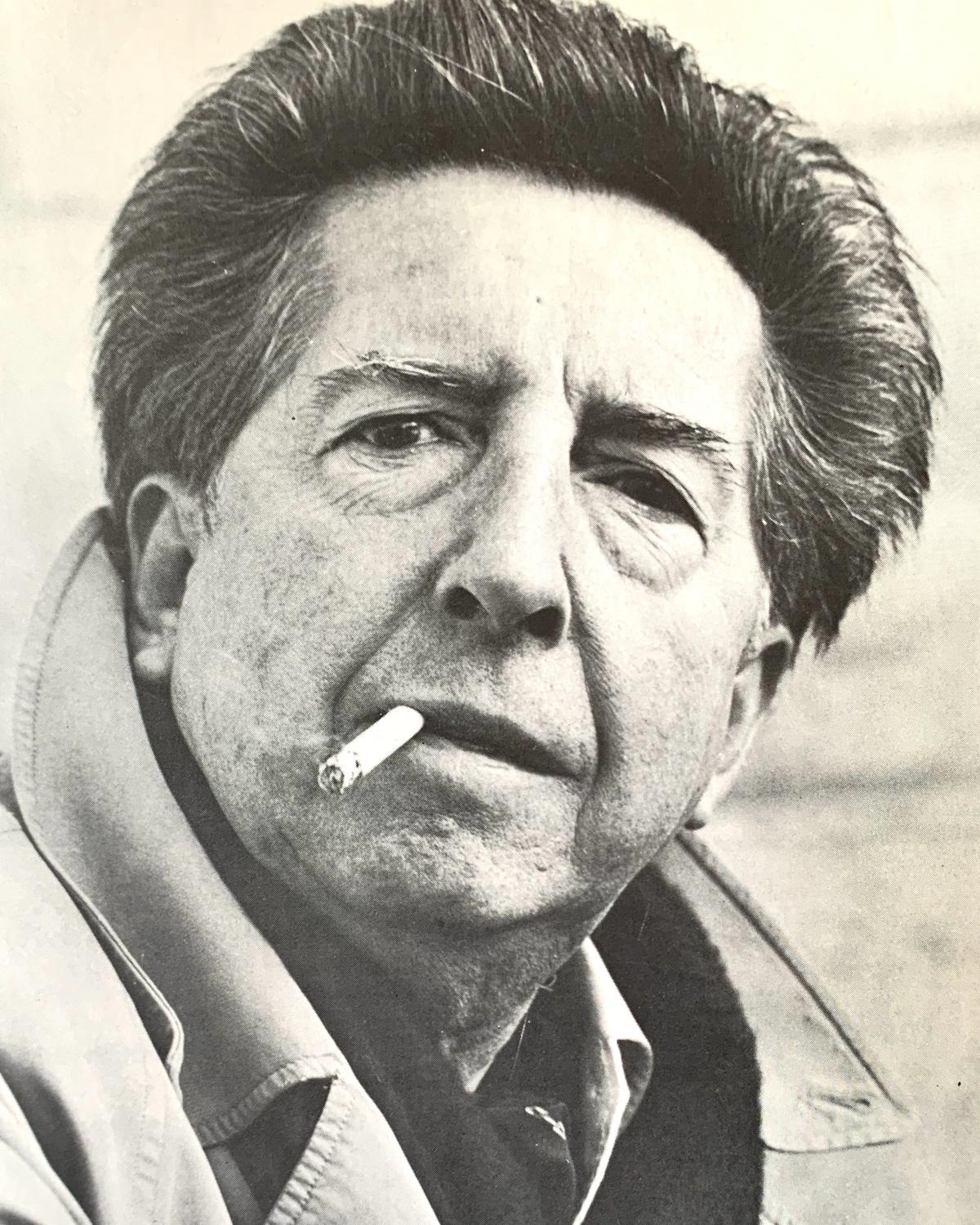
Henri Dutilleux was born in 1916 in Angers, into a family with deep roots in painting: his great-grandfather Constant Dutilleux was a friend of Delacroix and Corot. He studied harmony, counterpoint and composition at the Paris Conservatoire from 1933 to 1938, winning the Prix de Rome in 1938 with a cantata he would later withdraw.
After the war he became head of music production at French Radio (RTF, later ORTF) from 1945 to 1963, then taught composition at the École Normale de Musique in Paris and later at the Conservatoire. His students and admirers ranged from Karol Beffa to Hugues Dufourt.
His mature catalogue is famously small, fewer than thirty published works over a sixty-year career. He revised obsessively, withdrew pieces that no longer convinced him, and worked at a pace that puzzled his peers. The Symphony No. 2 took four years ; the cello concerto Tout un monde lointain took five.
His harmonic language sits between Debussy and the post-war avant-garde, modal, luminous, with what he called "progressive growth": themes don't develop in the classical sense but evolve cell by cell, like organisms. He resisted alignment with any school, neither serialist nor neo-classicist nor minimalist, which is why his reputation grew slowly but never faded.
He continued composing into his nineties and died in Paris in 2013 at 97. His marriage to pianist Geneviève Joy lasted sixty-two years until her death in 2009. He was named to the Légion d'honneur, won the Praemium Imperiale and the Ernst von Siemens prize, and is now widely considered the most significant French composer of the second half of the 20th century.
Key works
- 1948
Sonata for piano
Three movements written for his wife Geneviève Joy. The work he kept ; many earlier pieces he'd burn.
- 1951
Symphony No. 1
Four movements premiered by Roger Désormière. Already showing his rejection of orthodox post-war serialism.
- 1959
Symphony No. 2 "Le Double"
A small orchestra plays inside the large one, concerto grosso resurrected. Commissioned by Charles Munch for the Boston Symphony.
- 1965
Métaboles
Five movements where each section transforms the material of the previous one. Commissioned by George Szell for the Cleveland Orchestra.
- 1970
Tout un monde lointain... (cello concerto)
Five-movement concerto inspired by Baudelaire's Les Fleurs du mal. Mstislav Rostropovich premiered it ; it remains a touchstone of the late 20th-century cello repertoire.
- 1976
Ainsi la nuit (string quartet)
His single string quartet, seven linked movements. The only one: characteristically, he refused to repeat himself.
- 1985
L'Arbre des songes (violin concerto)
Five movements for Isaac Stern that branch like the title suggests. Commissioned by Radio France.
- 1997
The Shadows of Time
Five movements on memory and history, dedicated to Anne Frank and "all children who suffer." Premiered by Boston Symphony under Seiji Ozawa.
Why this matters to Louis
Dutilleux teaches patience. The lesson: write less, revise more, and never release a work that you wouldn't defend with your name on the cover.