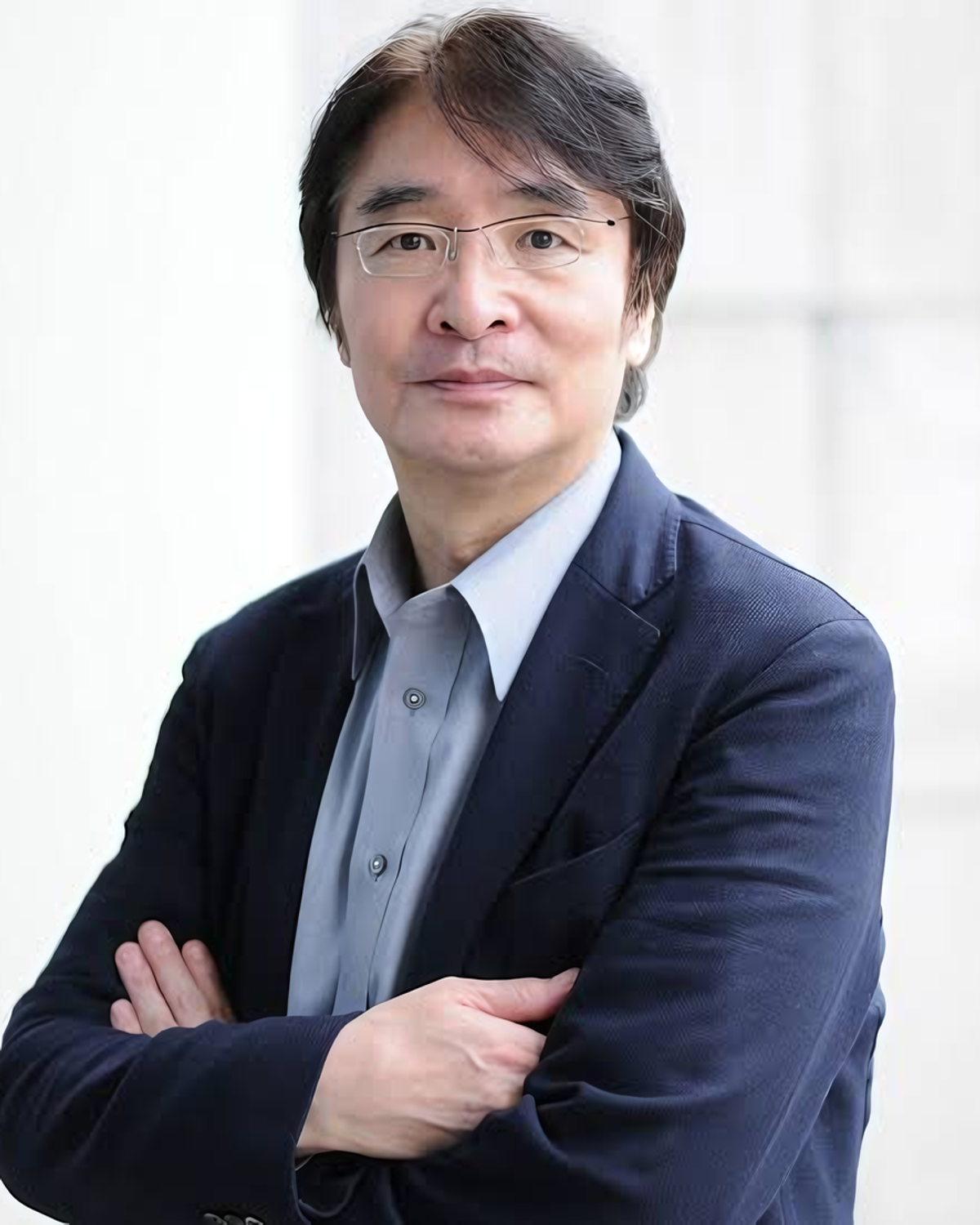
Masamichi Amano was born in Akita, Japan, in 1957. He came of age professionally in the late 1980s anime boom, but quickly distinguished himself from his peers by insisting on real orchestral recordings at a time when most studios were synthesising everything for budget reasons.
His decades-long collaboration with the Warsaw Philharmonic Orchestra and Choir became his signature. Rather than fly the orchestra to Tokyo, he traveled to Poland and recorded session after session in the same hall: building a working relationship that shows in the playing. The Warsaw recordings have a depth and ensemble cohesion that Japanese-based pickup orchestras rarely matched in that period.
His sound is the bridge between Bruckner-scale orchestral mass and the kinetic demands of Japanese animation. The Giant Robo score (1992) reset what anime could sound like: full late-romantic orchestral forces, with leitmotifs developed across episodes the way an operatic ring cycle develops them across nights. The "Theme of Giant Robo" is studied as a textbook of post-Mahlerian scoring.
Beyond anime, he scored several Kinji Fukasaku films including Battle Royale (2000), where his orchestral mass meets the director's dystopian visuals in a setting that quotes Verdi's Requiem almost literally. He also writes for video games (Sailor Moon Crystal arrangements, Code Geass) and conducts his own works.
Key works
- 1992
Giant Robo (OST)
Recorded with the Warsaw Philharmonic. The "Theme of Giant Robo" is anime's closest equivalent to a Mahler scherzo.
- 1999
Jin-Roh: The Wolf Brigade (Film score)
Chamber-scale wartime drama. The restraint here is as instructive as the maximalism elsewhere in his catalogue.
- 2000
Battle Royale (Film score)
Orchestral mass meeting Kinji Fukasaku's dystopia. Quotes from Verdi's Requiem repurposed for one of the most shocking films of the decade.
- 2003
Battle Royale II: Requiem (Film score)
Continuation of the orchestral language ; Fukasaku's final film, completed by his son Kenta.
- 2006
Code Geass: Lelouch of the Rebellion (Selected episodes)
Orchestral cues for one of the most musically ambitious anime series of the 2000s.
Why this matters to Louis
Amano is the case study for refusing the easy synth shortcut. If the screen deserves an orchestra, hire the orchestra. Louis follows that rule.