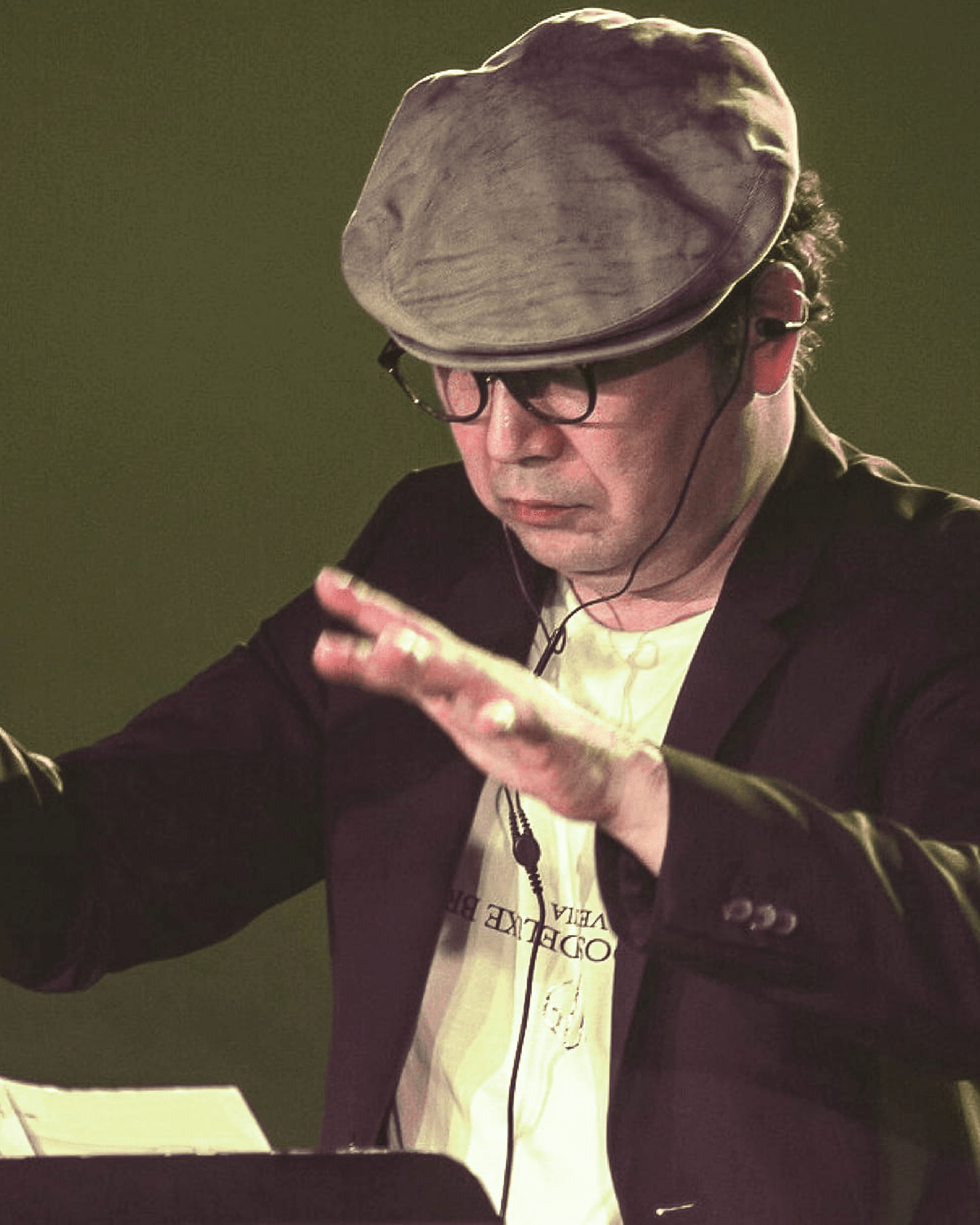
Yoshihisa Hirano studied composition and arrangement at Berklee College of Music in Boston. He returned to Japan to work primarily in anime and television, bringing a jazz-influenced harmonic vocabulary into a medium that had largely settled on stock orchestral or pop idioms.
His breakthrough came with the music for Death Note (2006), a co-credit with Hideki Taniuchi. The score moves between dissonant orchestral textures, sacred choral writing in fake Latin, and propulsive electronic passages: choices that gave the series its moral gravity. The cue "L's Theme" became one of the most-streamed pieces of anime music in the world.
Hirano scored the 2011 adaptation of Hunter × Hunter solo across 148 episodes, a sustained effort few composers in any medium have matched. The arc-by-arc thematic transformations in that score, particularly the music written for the Chimera Ant and Phantom Troupe arcs, are studied by anime composers as masterclasses in long-form character writing.
Outside the dark dramas, he also writes lighter chamber-scale material: his score for Ouran High School Host Club (2006) is a textbook of comic-timing orchestration, all string quartets and harpsichord doing slapstick. The range, Death Note to Ouran, shows a composer who treats each project on its own musical terms.
Key works
- 2006
Death Note (OST)
Co-scored with Hideki Taniuchi. Choral chants, dissonant strings, propulsive percussion. The series' moral weight carried entirely by score.
- 2006
Ouran High School Host Club (OST)
Showpiece of his lighter palette, chamber music as comic timing. String quartet + harpsichord doing precision slapstick.
- 2011
Hunter × Hunter (OST)
Multi-arc series score across 148 episodes. The "Phantom Troupe" and "Chimera Ant" cues are masterclasses in motif transformation across narrative arcs.
- 2013
Arpeggio of Blue Steel (OST)
Naval anime with full orchestral writing. Naval engagement scenes scored like Korngold sea-adventure cues.
Why this matters to Louis
Hirano shows that "popular" need not mean "simplified". Anime scoring at this level rewards close listening as much as any concert piece.